
Table of Contents
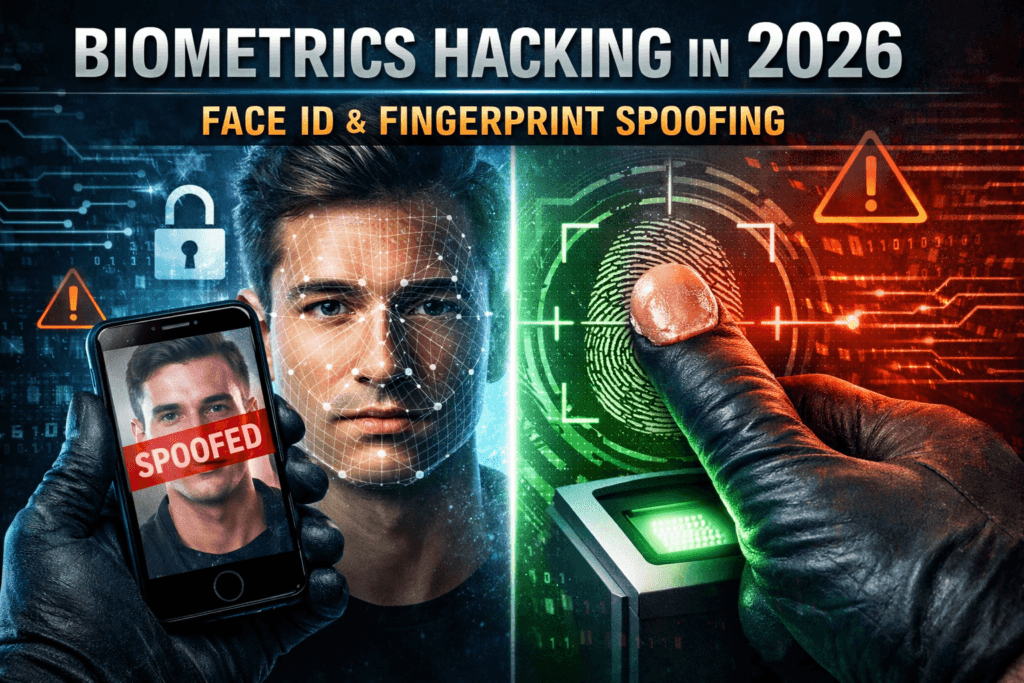
Biometrics hacking in 2026 is no longer a futuristic threat — it’s a real, growing risk for freelancers and small businesses across the U.S. From Face ID on smartphones to fingerprint scanners on laptops and office doors, biometric authentication has become the default security layer. It’s fast, convenient, and feels safer than passwords. But here’s the uncomfortable truth: Face ID and fingerprint systems can be spoofed.
Why Biometrics Feel Secure — and Why That’s Risky
Biometrics are marketed as “unique to you.” Your face, your fingerprint, your identity. Unlike passwords, you can’t forget them or reuse them. That’s exactly why many U.S. freelancers and small business owners trust biometric security blindly.
But biometric systems don’t store your actual face or fingerprint. They store digital templates — mathematical representations of your biometric traits. And those templates can be copied, reconstructed, or tricked.
Once biometric data is compromised, you can’t reset it like a password. That’s what makes biometrics hacking in 2026 especially dangerous.
How Face ID Gets Spoofed in 2026
1.AI‑Generated Face Replicas
Attackers now use AI models to create hyper‑realistic 3D face masks or deepfake projections. These aren’t cheap Halloween masks — they’re built using leaked images from social media, video calls, or compromised cloud photo backups.
Modern Face ID systems include liveness detection, but advanced attackers bypass it by:
- Simulating micro‑movements
- Mimicking eye reflection patterns
- Using infrared‑responsive materials
This is a major concern for freelancers who frequently appear on Zoom calls or post professional content online.
👉 Learn more about deepfake risks from the FTC: https://www.identitytheft.gov
2.Replay Attacks on Older Devices
Not all Face ID systems are created equal. Older devices and budget Android phones still rely on basic facial mapping. Hackers exploit this by replaying:
- High‑resolution videos
- Infrared face scans
- Recorded authentication sessions
Small businesses that allow employees to use personal devices (BYOD policies) are especially vulnerable.
How Fingerprint Systems Get Hacked in 2026
1.Lifted Fingerprints from Everyday Objects
Yes — this still works.
Fingerprints can be lifted from:
- Coffee cups
- Door handles
- Office desks
- Smartphones
Attackers use chemical processing and AI enhancement to recreate usable fingerprint molds. Freelancers working in shared coworking spaces face higher exposure here.
2.Synthetic Fingerprint Injection
In 2026, hackers increasingly target the sensor itself, not the finger. Using malware or hardware implants, attackers inject synthetic fingerprint data directly into the authentication process.
This method bypasses physical touch entirely and is especially dangerous for:
- Small offices with biometric door locks
- Laptops with built‑in fingerprint readers
More on biometric sensor vulnerabilities: https://www.nist.gov/itl/applied-cybersecurity/biometrics
Why Freelancers and Small Businesses Are Prime Targets
This is such an inspiring take on building real experience without waiting for the official job title. I love how you’re using AI not just to generate code or answers, but as a “virtual mentor” to challenge your thinking and simulate the mindset of the role you’re aiming for — that’s a powerful shift from doing tasks to strategizing your growth.
Your rule of sticking to the objective even when the plan changes is something I think many of us struggle with — pivoting tactically without losing sight of the end goal is key to long‑term progress.
Also, the focus on using AI as a compass rather than an autopilot — and verifying what it suggests with documentation or real human input — shows maturity in learning. That balance between fast iteration and deep understanding is what truly builds expertise.
Looking forward to more posts from your journey — there’s a lot here that resonates with anyone trying to grow beyond their current role. 💡
Biometrics Hacking in 2026: How Face ID & Fingerprint Systems Get Spoofed in 2026
In 2026, biometrics hacking is no longer a futuristic threat — it’s a real, growing risk for freelancers and small businesses across the U.S. From Face ID on smartphones to fingerprint scanners on laptops and office doors, biometric authentication has become the default security layer. It’s fast, convenient, and feels safer than passwords. But here’s the uncomfortable truth: Face ID and fingerprint systems can be spoofed.
For freelancers handling client data and small businesses relying on biometric access controls, understanding how biometric authentication systems get hacked in 2026 is critical. This guide breaks it down in simple, human terms — no fear‑mongering, just clarity and protection.
Why Biometrics Feel Secure — and Why That’s Risky
Biometrics are marketed as “unique to you.” Your face, your fingerprint, your identity. Unlike passwords, you can’t forget them or reuse them. That’s exactly why many U.S. freelancers and small business owners trust biometric security blindly.
But biometric systems don’t store your actual face or fingerprint. They store digital templates — mathematical representations of your biometric traits. And those templates can be copied, reconstructed, or tricked.
Once biometric data is compromised, you can’t reset it like a password. That’s what makes biometrics hacking in 2026 especially dangerous.
How Face ID Gets Spoofed in 2026
1. AI‑Generated Face Replicas
Attackers now use AI models to create hyper‑realistic 3D face masks or deepfake projections. These aren’t cheap Halloween masks — they’re built using leaked images from social media, video calls, or compromised cloud photo backups.
Modern Face ID systems include liveness detection, but advanced attackers bypass it by:
- Simulating micro‑movements
- Mimicking eye reflection patterns
- Using infrared‑responsive materials
This is a major concern for freelancers who frequently appear on Zoom calls or post professional content online.
👉 Learn more about deepfake risks from the FTC: https://www.identitytheft.gov
2. Replay Attacks on Older Devices
Not all Face ID systems are created equal. Older devices and budget Android phones still rely on basic facial mapping. Hackers exploit this by replaying:
- High‑resolution videos
- Infrared face scans
- Recorded authentication sessions
Small businesses that allow employees to use personal devices (BYOD policies) are especially vulnerable.
How Fingerprint Systems Get Hacked in 2026
1. Lifted Fingerprints from Everyday Objects
Yes — this still works.
Fingerprints can be lifted from:
- Coffee cups
- Door handles
- Office desks
- Smartphones
Attackers use chemical processing and AI enhancement to recreate usable fingerprint molds. Freelancers working in shared coworking spaces face higher exposure here.
2. Synthetic Fingerprint Injection
In 2026, hackers increasingly target the sensor itself, not the finger. Using malware or hardware implants, attackers inject synthetic fingerprint data directly into the authentication process.
This method bypasses physical touch entirely and is especially dangerous for:
- Small offices with biometric door locks
- Laptops with built‑in fingerprint readers
More on biometric sensor vulnerabilities: https://www.nist.gov/itl/applied-cybersecurity/biometrics
Why Freelancers and Small Businesses Are Prime Targets
Large enterprises invest in multi‑layered security. Freelancers and small businesses often don’t.
Common risky practices include:
- Relying only on Face ID or fingerprint login
- No secondary authentication
- Storing sensitive client data locally
- Using unmanaged personal devices
Cybercriminals know this. Biometric hacking is now a low‑effort, high‑reward attack vector.
Real‑World Impact of Biometrics Hacking in 2026
When biometric security fails, the consequences are serious:
- Client data breaches
- Financial fraud
- Identity theft
- Loss of business trust
- Legal liability under U.S. data protection laws
Unlike a password breach, biometric compromise can follow you for life.
How to Protect Against Biometrics Hacking in 2026
1.Always Use Multi‑Factor Authentication (MFA)
Biometrics should never be your only defense.Combine Face ID or fingerprint login with:Strong passwordsHardware security keysApp‑based authenticatorsCISA’s MFA guidance: https://www.cisa.gov/mfa
2. Limit Biometric Use to Device Unlocking
Avoid using biometrics for:
- Financial approvals
- Password managers
- Critical admin access
Use them for convenience — not authority
3.Secure Your Online Presence
Since Face ID spoofing often starts with stolen images:
- Lock down social media privacy
- Avoid posting high‑resolution face photos publicly
- Be cautious with video recordings
4.Keep Devices Updated
Many biometric exploits target outdated firmware. Regular updates patch:
- Sensor vulnerabilities
- AI spoofing weaknesses
- OS‑level authentication flaws
The Future of Biometric Security
Biometrics aren’t going away — but they’re evolving. By late 2026, we’re seeing movement toward:
- Continuous authentication
- Behavioral biometrics (typing patterns, movement)
- Privacy‑preserving biometric storage
Until then, awareness is your best defense
Conclusion: Biometrics Hacking in 2026 Is Real — But Preventable
Biometrics hacking in 2026 proves one thing: convenience is not security.
Face ID and fingerprint systems can be spoofed, especially when used alone. For U.S. freelancers and small businesses, the goal isn’t to abandon biometrics — it’s to use them wisely.
Layer your security. Protect your digital identity. And remember: your face and fingerprints are powerful credentials — treat them like permanent passwords.
If you found this guide helpful, explore more cybersecurity tips for freelancers and small businesses at https://www.cisa.gov and https://www.identitytheft.gov.
Stay secure. Your business depends on it.
Securing AI Automation Workflows (Zapier, Make.com, Airtable) Against Data Leaks