Table of Contents
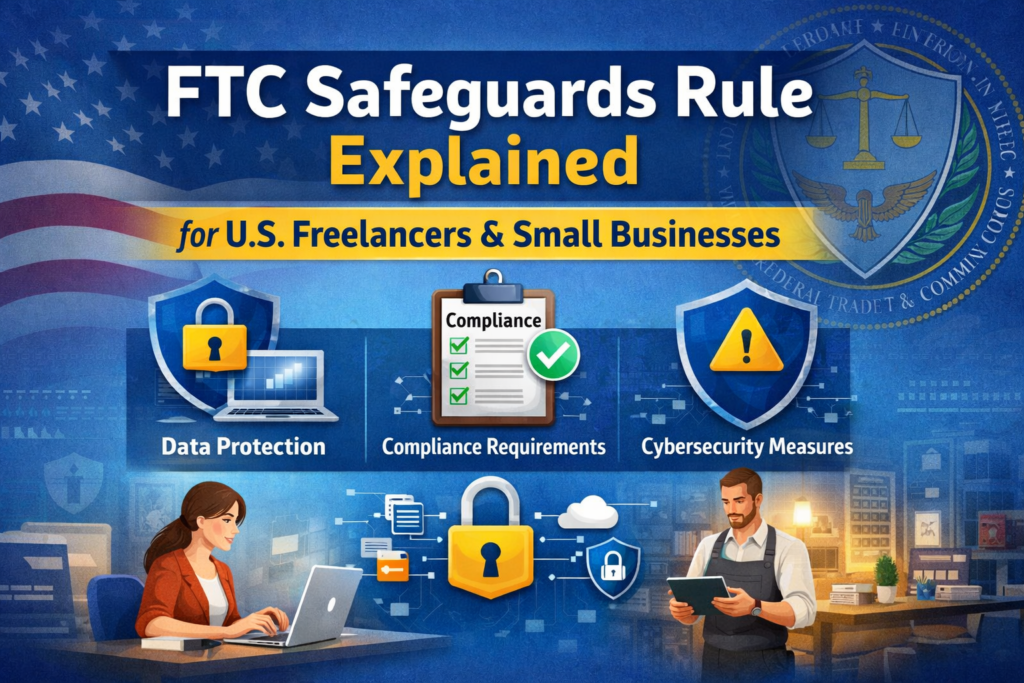
FTC Safeguards Rule explained for U.S. freelancers and small businesses is becoming an increasingly important topic as cybersecurity regulations tighten and clients expect stronger data protection. If you handle sensitive customer information such as financial data, tax documents, or personal records, understanding this rule can help protect your business from legal risks and cyber threats.
Many freelancers and small business owners assume cybersecurity regulations only apply to large corporations. However, certain independent professionals—especially those dealing with financial data—may fall under the scope of the FTC Safeguards Rule, which requires businesses to implement security programs that protect customer information.
This guide explains what the rule is, who must comply, and how freelancers and small businesses can protect sensitive data while building trust with clients.
What Is the FTC Safeguards Rule?
The FTC Safeguards Rule explained for U.S. freelancers and small businesses starts with understanding its purpose. The rule comes from the Gramm-Leach-Bliley Act (GLBA) and requires certain businesses to develop and maintain a comprehensive information security program to protect customer data.
The rule focuses on protecting non-public personal information, such as:
- Financial records
- Social Security numbers
- Credit reports
- Tax information
- Banking details
According to the U.S. Federal Trade Commission, the Safeguards Rule requires businesses to implement administrative, technical, and physical safeguards to secure customer information. (Federal Trade Commission)
You can read the official guidance here:
https://www.ftc.gov/business-guidance/resources/ftc-safeguards-rule-what-your-business-needs-know
For freelancers and small businesses that work with sensitive financial data, compliance is not just about avoiding penalties—it’s about protecting clients and maintaining professional credibility.
Why the FTC Safeguards Rule Matters for Freelancers
Understanding the FTC Safeguards Rule explained for U.S. freelancers and small businesses is especially important in today’s remote work economy.
Many freelancers now manage tasks that involve sensitive information, including:
- Tax preparation
- Financial consulting
- Credit services
- Accounting and bookkeeping
- Payment processing services
Even small freelance businesses may be considered financial institutions under the law, depending on the services they provide. (Federal Trade Commission)
Cybercriminals often target small businesses because they assume these companies have weaker security systems. If freelancers fail to secure client data, they risk:
- Data breaches
- Legal liability
- Client trust damage
- Loss of business reputation
Implementing safeguards early helps freelancers operate professionally and responsibly.
Who Must Follow the FTC Safeguards Rule?
When discussing the FTC Safeguards Rule explained for U.S. freelancers and small businesses, it is important to understand that not every freelancer must comply.
The rule applies mainly to businesses engaged in financial activities, including:
- Mortgage brokers
- Tax preparation services
- Financial advisors
- Credit counseling firms
- Payday lenders
- Investment advisors
- Debt collectors
If a freelancer or small business handles financial information related to customers, they may fall under the definition of a financial institution under the rule. (Federal Trade Commission)
However, even businesses that are not legally required to comply should still adopt similar cybersecurity practices to protect client data.
Key Security Requirements of the FTC Safeguards Rule
The FTC Safeguards Rule explained for U.S. freelancers and small businesses includes several core requirements designed to protect sensitive customer information.
1. Create a Written Information Security Program
Businesses must develop a written plan outlining how they protect customer data. This program should include policies, procedures, and technical safeguards.
The program must be appropriate for:
- The size of the business
- The complexity of operations
- The sensitivity of the data handled
Even solo freelancers can create a simple but effective security framework.
2. Assign a Security Responsible Person
The rule requires businesses to designate a qualified individual responsible for overseeing cybersecurity practices.
For freelancers, this usually means the business owner themselves. This person must monitor security practices and ensure that safeguards remain effective.
3. Conduct Risk Assessments
Freelancers and small businesses must identify potential risks that could expose customer information.
Risk assessments may include:
- Identifying where sensitive data is stored
- Evaluating software security
- Reviewing employee or contractor access
- Assessing third-party services
Regular risk assessments help businesses adapt to evolving cyber threats.
4. Implement Technical Safeguards
Another key part of the FTC Safeguards Rule explained for U.S. freelancers and small businesses is implementing technical security controls.
Examples include:
- Multi-factor authentication (MFA)
- Encryption for stored data
- Secure cloud storage systems
- Access control policies
- Monitoring systems for suspicious activity
These safeguards significantly reduce the risk of unauthorized access to sensitive information.
5. Monitor and Test Security Systems
Cybersecurity is not a one-time setup. The rule requires businesses to monitor and test their security programs regularly.
Businesses may conduct:
- Vulnerability scans
- Security audits
- Penetration testing
- Access monitoring
Regular testing ensures security measures remain effective against new cyber threats.
6. Create an Incident Response Plan
An incident response plan helps businesses react quickly if a security breach occurs.
The plan should include:
- Steps to detect breaches
- Communication procedures
- Client notification strategies
- Recovery processes
In recent updates, businesses must also report certain data breaches involving customer information to the FTC within 30 days of discovery. (Federal Trade Commission)
Best Practices for Freelancers to Stay Compliant
Even if your freelance business is small, following these best practices can help align with the FTC Safeguards Rule explained for U.S. freelancers and small businesses.
Use Secure Password Policies
Strong passwords and password managers reduce the risk of unauthorized access.
Enable Multi-Factor Authentication
MFA adds an extra layer of protection to accounts storing sensitive data.
Encrypt Sensitive Files
Encryption ensures that even if files are intercepted, attackers cannot read the data.
Limit Data Access
Only authorized individuals should have access to sensitive client information.
Regularly Update Software
Outdated software can contain vulnerabilities that hackers exploit.
Following these practices improves both cybersecurity and regulatory compliance.
How Compliance Builds Client Trust
Understanding the FTC Safeguards Rule explained for U.S. freelancers and small businesses can also improve your professional reputation.
Clients increasingly prioritize cybersecurity when choosing service providers. Businesses prefer freelancers who:
- Protect sensitive financial data
- Follow cybersecurity standards
- Maintain secure communication systems
When freelancers demonstrate strong data protection practices, they position themselves as reliable partners for long-term business relationships.
Conclusion
The FTC Safeguards Rule explained for U.S. freelancers and small businesses highlights the growing importance of cybersecurity in the digital economy. As freelancers increasingly manage financial and personal data, protecting that information is both a legal responsibility and a business necessity.
By implementing strong security programs, conducting risk assessments, and adopting modern cybersecurity tools, freelancers can reduce data breach risks while building client trust.In today’s competitive freelance marketplace, protecting customer information isn’t just about compliance—it’s about professionalism, credibility, and long-term business success.
FAQs
1.What is the FTC Safeguards Rule for freelancers?
The FTC Safeguards Rule explained for U.S. freelancers and small businesses refers to regulations requiring certain businesses that handle financial data to implement security programs protecting customer information.
2.Does the FTC Safeguards Rule apply to all freelancers?
No. The rule mainly applies to freelancers and small businesses engaged in financial services, such as tax preparation, financial advising, or credit services.
3.Why is the FTC Safeguards Rule important for small businesses?
The FTC Safeguards Rule explained for U.S. freelancers and small businesses ensures that companies protect sensitive customer information from data breaches, cyberattacks, and unauthorized access.
4.What security measures are required under the FTC Safeguards Rule?
Key requirements include risk assessments, encryption, multi-factor authentication, incident response planning, and monitoring systems designed to protect customer information.
5.Can freelancers follow the FTC Safeguards Rule even if they are not required?
Yes. Many freelancers voluntarily implement these safeguards to strengthen cybersecurity and protect client data.
You may also like this blog:
Client Portal Security: How U.S. Freelancers Should Share Files Safely