
Table of Contents
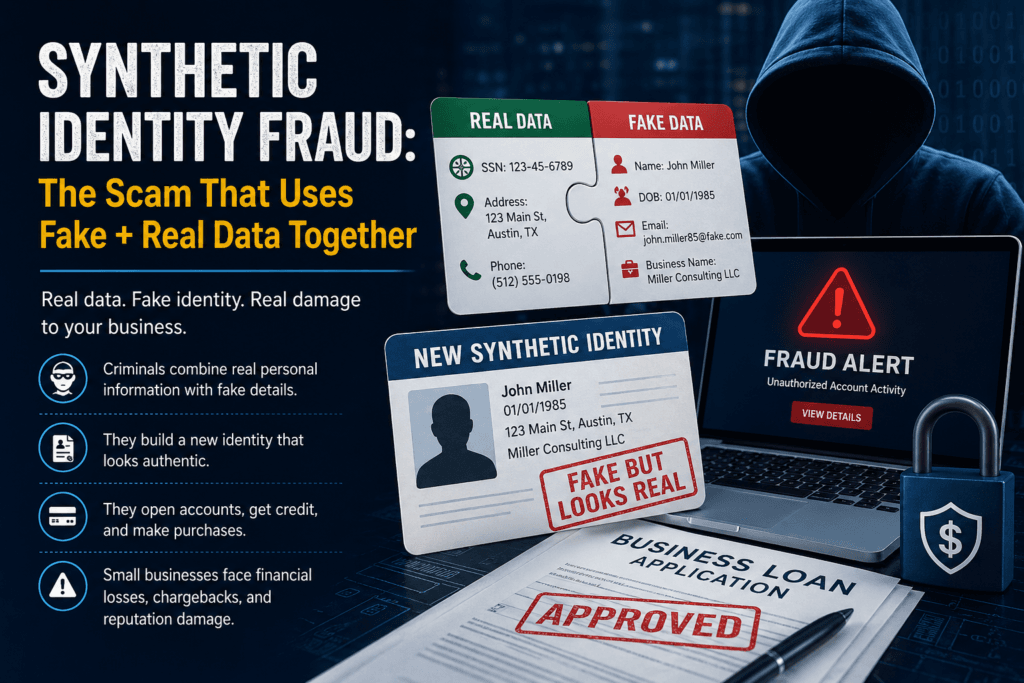
How synthetic identity fraud affects small businesses in the USA is becoming a serious concern for freelancers and business owners who rely on digital payments and online clients. Many people still believe identity theft only happens when someone steals a credit card or hacks a bank account. In reality, criminals now combine real personal data with fake information to create a completely new false identity that can be used to commit financial fraud against small businesses.
This type of fraud can quietly damage your finances, hurt customer trust, and even expose your business to compliance risks.
This scam is part of a larger rise in online business threats, which is why every freelancer should understand the basics of cybersecurity for freelancers and small businesses in the USA.
According to the Federal Reserve System, synthetic identity fraud happens when criminals blend legitimate information like a Social Security number with fake names, addresses, or birth dates to create a new person who does not actually exist. (Federal Reserve)
What Is Synthetic Identity Fraud?
How synthetic identity fraud affects small businesses in the USA starts with stolen data. A scammer may take:
- A real Social Security number
- A real phone number
- A real address
- A real business EIN
Then they combine it with false details such as:
- Fake name
- Fake date of birth
- Fake email address
- Fake company profile
The result is a synthetic identity that appears legitimate enough to:
- Open business accounts
- Apply for loans
- Purchase products on credit
- Pass basic verification checks
Unlike traditional identity theft, no single victim may notice right away because the identity is partially fake.
Why Small Businesses Are Easy Targets
Freelancers and small businesses often have fewer security layers than large companies. That makes how synthetic identity fraud affects small businesses in the USA especially important for entrepreneurs to understand.
Small businesses often:
- Approve invoices quickly
- Use digital onboarding tools
- Trust online payment systems
- Lack dedicated fraud teams
- Store customer data in multiple apps
Fraudsters know smaller companies may not detect suspicious patterns until the damage is done.
How the Scam Works
Here is the typical process criminals follow:
1. Collect Real Data
They steal information from:
- Data breaches
- Phishing emails
- Social media
- Public records
2. Build a Fake Identity
They mix real and fake details to create a believable person.
3. Establish Credit
They slowly build trust by:
- Opening small accounts
- Making minor payments
- Creating a digital footprint
4. Execute the Fraud
Once trusted, they:
- Request large credit lines
- Buy expensive goods
- Disappear without paying
This “bust-out” strategy can leave businesses with significant losses. (KPMG)
Warning Signs for Freelancers
Knowing how synthetic identity fraud affects small businesses in the USA can help you spot it early.
Watch for:
Unusual client behavior
A new client who:
- Rushes payment requests
- Refuses video calls
- Changes contact details often
Mismatched information
Examples include:
- Business name does not match EIN
- Phone number differs from billing records
- Shipping address differs from company address
Strange payment patterns
Such as:
- Overpayments
- Multiple cards
- Split transactions
Financial Damage to Small Businesses
Synthetic identity fraud can create serious losses.
Direct losses
You may lose:
- Product inventory
- Unpaid invoices
- Chargeback fees
Credit damage
Your business may:
- Be denied financing
- Lose vendor trust
- Face higher insurance costs
Reputation harm
Customers may lose confidence if fraud touches their data.
How to Protect Your Business
Because how synthetic identity fraud affects small businesses in the USA can be severe, prevention matters.
Verify clients carefully
Before large transactions:
- Confirm business registration
- Check tax ID numbers
- Validate addresses
- Request live video verification
You can verify businesses through the U.S. Small Business Administration or state registration databases.
Use stronger payment controls
Protect yourself by:
- Requiring deposits
- Using secure invoicing software
- Setting payment alerts
- Flagging unusual purchase sizes
Monitor business credit
Check your business reports regularly through:
- Dun & Bradstreet
- Experian Business
- Equifax Business
Unexpected accounts may reveal fraud early.
Train your team
Even a small team should know:
- How phishing works
- How invoice scams work
- How identity fraud works
Employee awareness reduces risk significantly.
Use identity verification tools
Modern fraud prevention tools can:
- Detect synthetic identities
- Check device fingerprints
- Verify documents
- Spot unusual behavior patterns
These tools are becoming essential for online businesses.Businesses that use AI-powered tools should also learn how to use AI tools at work securely for freelancers and small businesses to avoid exposing sensitive client records.
Useful Resource
For official fraud guidance, visit the Federal Trade Commission Identity Theft portal:
https://www.identitytheft.gov
The FTC provides recovery steps for businesses and consumers dealing with identity-related fraud.
FAQs
What makes synthetic identity fraud different from regular identity theft?
Traditional identity theft steals a real person’s full identity. Synthetic identity fraud combines real and fake data to create a new false identity.
Can freelancers be targeted by synthetic identity fraud?
Yes. Freelancers can be targeted through fake clients, false invoices, and fraudulent payment methods.
Why is synthetic identity fraud hard to detect?
Because the identity contains real information, it can pass many normal verification systems.
Can synthetic identity fraud hurt business credit?
Yes. Fraud can lead to unpaid balances, disputed accounts, and damaged credit profiles.
What industries face the highest risk?
High-risk industries include:
- E-commerce
- Consulting
- Financial services
- SaaS businesses
- Remote freelance services
Final Thoughts
Understanding how synthetic identity fraud affects small businesses in the USA is becoming essential for freelancers and business owners who work online. Criminals are no longer just stealing identities — they are creating new ones using pieces of real information.
The best defense is to:
- verify every client,
- secure customer data,
- monitor your business credit,
- and question anything unusual.
Catching fraud early can save your business from major financial loss and long-term reputational damage.