Table of Contents
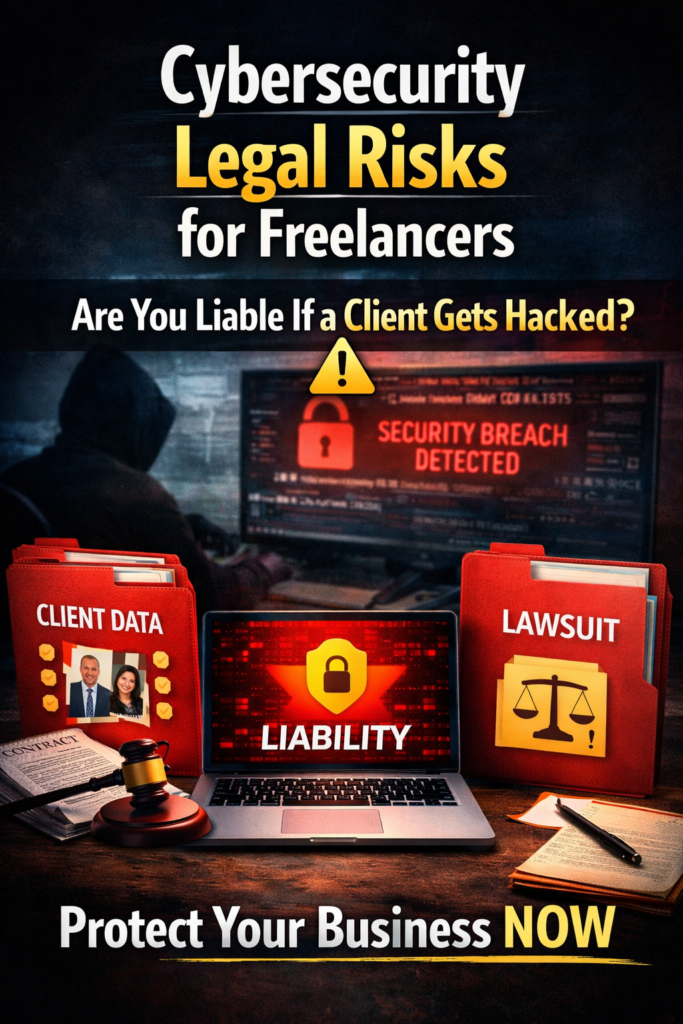
Cybersecurity legal risks for freelancers are no longer something you can ignore—especially if you work with U.S.-based clients. If a client gets hacked and their sensitive data was handled by you, the question quickly becomes: are you legally responsible?
With cyberattacks rising and data protection laws becoming stricter, freelancers and small business owners must understand where liability begins—and how to protect themselves before it’s too late.
Understanding Cybersecurity Legal Risks for Freelancers
Cybersecurity legal risks for freelancers refer to the potential legal consequences you may face if client data is exposed, mishandled, or breached while under your control.
Even if you’re not directly responsible for a hack, you could still be held liable if:
- You failed to follow basic security practices
- You didn’t meet contractual security obligations
- You handled sensitive data without proper safeguards
In the U.S., clients expect freelancers to maintain a reasonable standard of cybersecurity, especially when dealing with personal, financial, or business-critical information.
Can Freelancers Be Held Liable for a Client Data Breach?
Yes, freelancers can be held liable—but it depends on the situation.
Here’s how liability is usually determined:
🔹 1. Negligence
If you didn’t take reasonable steps to protect client data (like using weak passwords or unsecured WiFi), you could be considered negligent.
🔹 2. Contractual Obligations
Many freelance agreements include clauses about data protection. If you violate those terms, you may be legally responsible.
🔹 3. Type of Data Involved
Handling sensitive data (like customer records, login credentials, or financial data) increases your responsibility—and risk.
🔹 4. Security Measures Used
If you followed best practices (VPNs, encryption, secure storage), your liability may be reduced.
Common Scenarios Where Freelancers Face Legal Risk
Understanding real-world situations can help you avoid costly mistakes.
⚠️ Scenario 1: Weak Passwords
You store client login details in a simple document without encryption—and it gets hacked.
👉 Result: You could be held responsible for poor security practices.
⚠️ Scenario 2: Using Public WiFi
You access client systems from an unsecured café network.
👉 Result: Data interception could lead to liability claims.
⚠️ Scenario 3: Phishing Attack
You accidentally click a phishing email and expose client credentials.
👉 Result: Even if accidental, you may still share responsibility.
⚠️ Scenario 4: No Contract Protection
You don’t have a written agreement defining your cybersecurity responsibilities.
👉 Result: You may face unlimited liability depending on the situation.
Cybersecurity Laws That Affect U.S. Freelancers
Even if you’re not based in the U.S., working with U.S. clients means you could be affected by their regulations.
Some key frameworks include:
- CCPA (California Consumer Privacy Act)
- FTC Data Protection Guidelines
- HIPAA (for healthcare-related work)
You can review official FTC guidance here:
👉 https://www.ftc.gov/business-guidance/resources/protecting-personal-information-guide-business
These laws emphasize:
- Protecting personal data
- Reporting breaches
- Maintaining reasonable security measures
How to Reduce Cybersecurity Legal Risks for Freelancers
The good news? You can significantly reduce your risk with a few smart steps.
✅ 1. Use Strong Contracts (Non-Negotiable)
Your contract should clearly define:
- Your responsibilities
- Client responsibilities
- Liability limitations
- Data handling policies
👉 Include a “limitation of liability” clause to protect yourself.
✅ 2. Follow Basic Cybersecurity Practices
At minimum:
- Use strong, unique passwords
- Enable 2FA (Two-Factor Authentication)
- Use a VPN on public networks
- Keep devices updated
✅ 3. Secure Your Workspace
Your home office setup matters more than you think:
- Lock your devices
- Avoid shared systems
- Use encrypted storage
✅ 4. Avoid Handling Sensitive Data When Possible
If your work doesn’t require access to sensitive data:
👉 Don’t ask for it.
Less access = less liability.
✅ 5. Get Cyber Liability Insurance
Many U.S. freelancers now use cyber insurance to:
- Cover legal costs
- Handle data breach claims
- Protect business reputation
Why Freelancers Can’t Ignore Cybersecurity Anymore
Clients are becoming more aware of cybersecurity risks—and they expect the same from freelancers.
In fact:
- Businesses prefer freelancers who understand data protection
- A single breach can damage your reputation permanently
- Legal costs can be financially devastating
👉 This is not just about tech—it’s about trust and business survival
Long-Tail Keyword Section: Cybersecurity Liability for Freelancers in the USA
When it comes to cybersecurity liability for freelancers in the USA, the expectations are clear: you must demonstrate reasonable care in protecting client data.
Even small freelancers are expected to:
- Follow industry-standard security practices
- Understand basic data protection laws
- Communicate transparently with clients
Ignoring these responsibilities can result in:
- Contract termination
- Legal disputes
- Loss of future opportunities
Final Thoughts
Cybersecurity legal risks for freelancers are real—and growing. Whether you’re a writer, developer, marketer, or consultant, your responsibility doesn’t end at delivering work.
If a client gets hacked and your security practices were weak, you could face serious consequences.
But with:
- Strong contracts
- Basic cybersecurity habits
- Clear boundaries
👉 You can protect both your clients and your business.
FAQs
1. Are freelancers legally responsible for data breaches?
Freelancers can be held responsible if negligence or failure to follow agreed security practices contributed to the breach.
2. Do I need a contract for cybersecurity protection?
Yes, a contract is essential. It defines your responsibilities and can limit your legal liability.
3. What is the biggest cybersecurity mistake freelancers make?
Using weak passwords and unsecured networks is one of the most common and risky mistakes.
4. Can I be sued if a client gets hacked?
Yes, especially if your actions (or lack of security) contributed to the breach.
5. How can I protect myself legally as a freelancer?
Use strong contracts, follow cybersecurity best practices, and consider cyber liability insurance.
You may also like this blog: Cybersecurity Contracts: What U.S. Freelancers Should Add to Protect Themselves