Table of Contents
Introduction
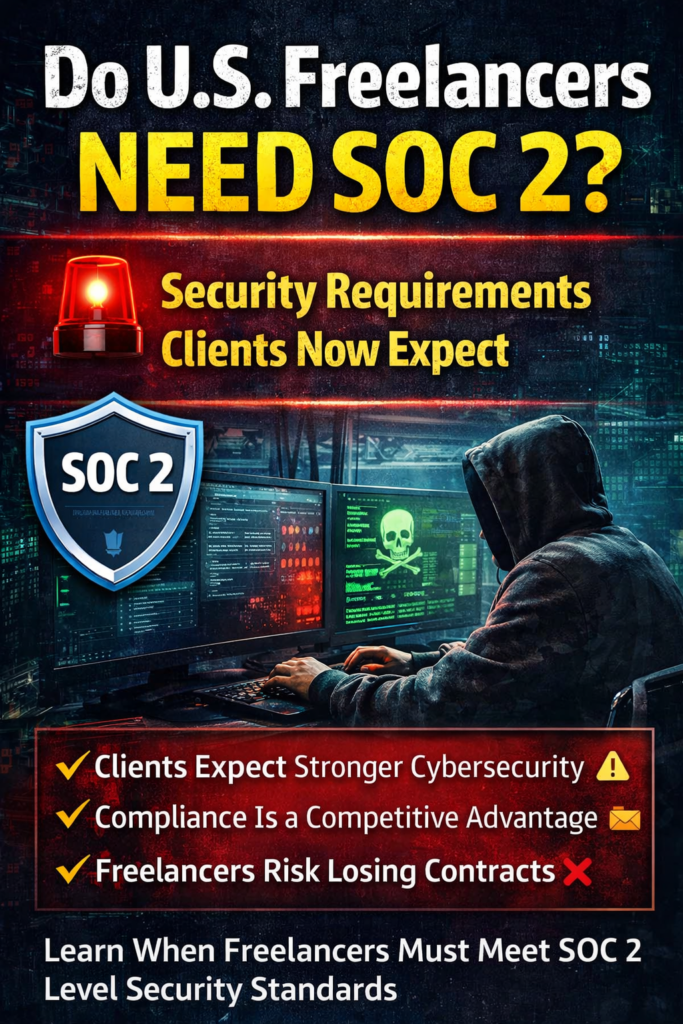
Do U.S. freelancers need SOC 2? This question is becoming increasingly common as clients raise their security expectations. If you’re a freelancer working with U.S.-based businesses—especially in tech, SaaS, or handling sensitive data—you’ve likely noticed stricter security requirements in contracts and onboarding processes.
Today, cybersecurity is no longer optional. Clients want assurance that their data is safe, and frameworks like SOC 2 are becoming a benchmark for trust. But does that mean every freelancer needs SOC 2 compliance?
Let’s break it down in a practical, no-fluff way.
What Is SOC 2 and Why Does It Matter?
Before answering do U.S. freelancers need SOC 2, it’s important to understand what SOC 2 actually is.
SOC 2 (System and Organization Controls 2) is a security framework designed to ensure that service providers securely manage customer data. It focuses on five key principles:
- Security
- Availability
- Processing Integrity
- Confidentiality
- Privacy
Companies—especially SaaS businesses—use SOC 2 reports to prove they follow strong security practices.
👉 Learn more from the official AICPA guide:
https://www.aicpa.org/resources/article/what-is-soc-2
Do U.S. Freelancers Need SOC 2 in 2026?
The Short Answer
Do U.S. freelancers need SOC 2?
👉 Not always—but increasingly, yes (indirectly).
Freelancers themselves are usually not required to obtain full SOC 2 certification. However, many clients now expect freelancers to follow SOC 2-level security practices.
Why Clients Expect SOC 2-Level Security from Freelancers
Even if you’re a solo freelancer, you can still be a security risk in your client’s workflow.
1. You Handle Sensitive Data
Freelancers often access:
- Customer databases
- Internal tools
- APIs and cloud systems
A weak security setup on your end can lead to a data breach.
2. Supply Chain Attacks Are Rising
Cybercriminals target freelancers as the weakest link in the security chain. This is known as a supply chain attack.
If your device or account is compromised, hackers can use your access to infiltrate your client’s systems.
3. U.S. Companies Must Meet Compliance Standards
Many U.S. companies are required to comply with:
- SOC 2
- HIPAA
- GDPR
To stay compliant, they expect everyone they work with—including freelancers—to follow strict security practices.
When Do U.S. Freelancers Need SOC 2?
Let’s clarify this further.
You MAY Need SOC 2 (or Equivalent Practices) If:
- You work with SaaS companies
- You handle user data or financial information
- You have backend or admin access
- You work long-term with enterprise clients
You May NOT Need SOC 2 If:
- You only do content writing or design
- You don’t access sensitive systems
- You work on short-term, low-risk projects
💡 Key Insight:
Even if certification isn’t required, security expectations are rising across all freelance roles.
What Clients Actually Expect from Freelancers
Instead of asking “do U.S. freelancers need SOC 2,” a better question is:
👉 “What security practices do clients expect?”
Here’s what most U.S. clients now look for:
1. Secure Device Usage
- Updated OS and software
- Antivirus or endpoint protection
- No public Wi-Fi without VPN
2. Strong Access Control
- Use of password managers
- Two-factor authentication (2FA)
- Unique passwords for every tool
3. Data Protection Practices
- No storing client data locally without encryption
- Secure file sharing (not random Google Drive links)
- Proper data deletion after project completion
4. Communication Security
- Avoid sharing credentials via email
- Use secure collaboration tools
SOC 2 vs Freelancers: The Real Difference
SOC 2 Certification
- Expensive (can cost thousands of dollars)
- Requires audits
- Designed for companies
Freelancers
- Don’t need full certification
- Should follow SOC 2-aligned practices
💡 Think of it this way:
You don’t need the certificate, but you must adopt the mindset and practices.
How Freelancers Can Align with SOC 2 Without Certification
If you’re wondering again, do U.S. freelancers need SOC 2, here’s the practical solution:
1. Create a Basic Security Policy
Write a simple document covering:
- Password practices
- Device security
- Data handling
2. Use Secure Tools
- Password managers (like Bitwarden)
- VPN for remote work
- Encrypted storage solutions
3. Limit Access
Only request access to what you actually need.
4. Stay Updated on Threats
Follow cybersecurity blogs and updates to stay aware of risks.
Benefits of Following SOC 2 Practices as a Freelancer
Even without certification, aligning with SOC 2 gives you a competitive edge.
1. Win Higher-Paying Clients
Enterprise clients prefer freelancers who understand security.
2. Build Trust Faster
Security awareness makes you look professional and reliable.
3. Reduce Risk of Data Breaches
Protect your reputation and avoid costly mistakes.
Common Mistakes Freelancers Make
Even experienced freelancers often ignore basic security.
- Reusing passwords
- Using unsecured Wi-Fi
- Sharing credentials casually
- Ignoring software updates
These mistakes can cost you clients—or worse, your reputation.
Conclusion
So, do U.S. freelancers need SOC 2?
👉 The answer is no for certification, but yes for security practices.
Clients in the U.S. are raising their standards, and freelancers must adapt. You don’t need to go through expensive audits, but you do need to demonstrate that you take data security seriously.
If you want to stay competitive, win better clients, and protect your freelance business, adopting SOC 2-level practices is no longer optional—it’s essential.
FAQs
1. Do U.S. freelancers need SOC 2 certification
No, freelancers typically don’t need full SOC 2 certification, but they should follow similar security practices.
2. Why do clients ask freelancers about SOC 2
Clients want to ensure their data is protected and that freelancers won’t introduce security risks.
3. Can freelancers get SOC 2 certified?
Yes, but it’s expensive and usually unnecessary for solo professionals.
4. What is the alternative to SOC 2 for freelancers?
Following basic cybersecurity practices like strong passwords, encryption, and secure tools is usually enough.
5. How can freelancers prove they follow security practices?
You can
• Mention it in proposals
• Create a simple security policy
• Use secure tools and workflows
You may also like this blog:
FTC Safeguards Rule Explained for U.S. Freelancers & Small Businesses