
Table of Contents
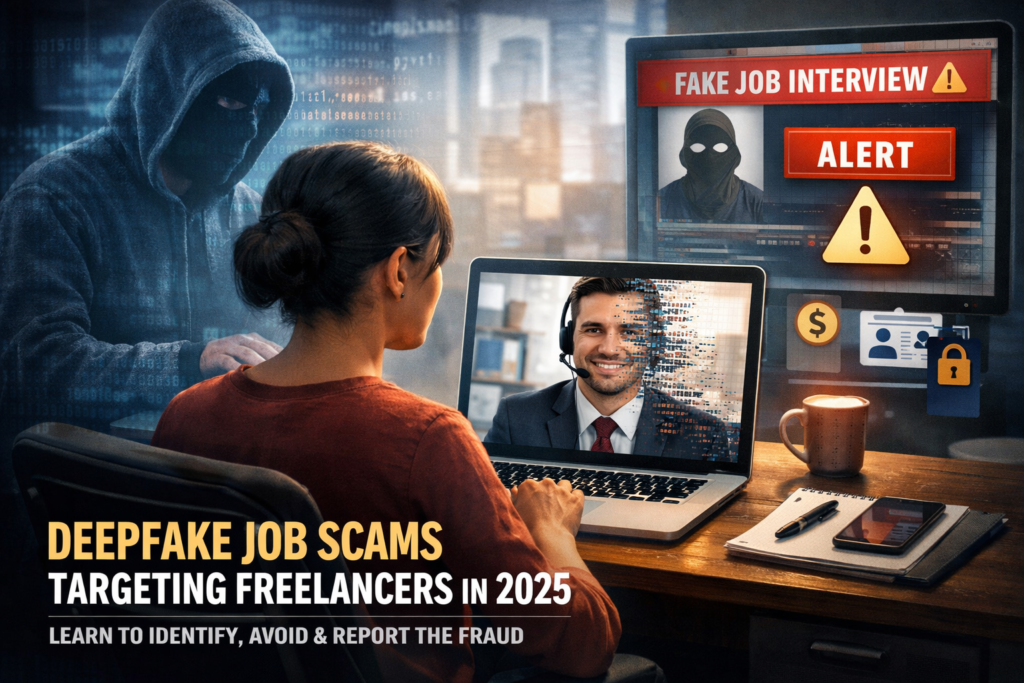
Deepfake job interviews and recruitment scams targeting U.S. freelancers are a growing threat in 2025. While freelancing in the United States offers unprecedented opportunities, remote work platforms and AI-powered hiring tools have also made it easier for scammers to exploit unsuspecting professionals.
What looks like a legitimate Zoom interview, complete with a friendly recruiter and a polished company pitch, may actually be a highly convincing AI-generated deepfake designed to steal your data, money, or identity.
This is not science fiction. It’s happening right now—and U.S. freelancers are among the primary targets.
What Are Deepfake Job Interviews?
A deepfake job interview uses artificial intelligence to generate realistic video or audio of a person who doesn’t actually exist—or impersonates a real recruiter. Scammers combine AI-generated faces, cloned voices, and scripted conversations to create fake hiring experiences.
These scams are especially effective because they exploit trust, urgency, and the remote nature of freelance work in the U.S.
According to the FBI, AI-driven impersonation scams are rapidly increasing, particularly in employment and business communications
👉 https://www.ic3.gov
Why U.S. Freelancers Are Prime Targets
Deepfake recruitment scams disproportionately affect U.S.-based freelancers for several reasons:
- The U.S. freelance market is large and global-facing
- American freelancers often work with overseas clients
- Remote hiring is normalized post-pandemic
- Payment platforms like PayPal, Zelle, and direct deposit are commonly used
Scammers know that freelancers are used to onboarding remotely, signing contracts digitally, and sharing documents online. This makes deepfake job interviews and recruitment scams targeting U.S. freelancers especially convincing.
How These Recruitment Scams Usually Work
While the technology is advanced, the scam pattern is surprisingly consistent.
1. The Initial Outreach
You receive a message via LinkedIn, email, or a freelance platform claiming to be from a recruiter at a known company or startup.
2. The AI-Powered Interview
The “recruiter” appears on a video call with realistic facial movements and professional language. Some scammers even clone real executives’ faces using publicly available videos.
3. The Trust-Building Phase
They praise your skills, offer competitive pay, and move fast—often skipping standard hiring steps.
4. The Trap
You’re asked to:
- Share your SSN or ID for “HR verification”
- Pay a small onboarding or equipment fee
- Install software or browser extensions
- Provide bank details for direct deposit
At this point, the scam is complete.
Red Flags U.S. Freelancers Should Never Ignore
If you’re freelancing in the U.S., watch closely for these warning signs during interviews:
- Recruiters refusing to turn on real-time video or reacting unnaturally
- Overly polished speech with no casual pauses
- Pressure to act immediately
- Requests for payment before work begins
- Use of generic email domains instead of official company domains
The Federal Trade Commission (FTC) warns that legitimate employers will never ask for money upfront
👉 https://consumer.ftc.gov
Real Consequences of Deepfake Recruitment Scams
These scams don’t just waste time. They cause serious damage.
U.S. freelancers have reported:
- Identity theft
- Bank account takeovers
- Tax fraud using stolen SSNs
- Malware infections on work devices
- Loss of professional credibility
The emotional toll is real too—many victims feel embarrassed, even though the deception is highly sophisticated.
How to Protect Yourself as a U.S. Freelancer
You don’t need to be a cybersecurity expert to stay safe. Simple steps can dramatically reduce your risk.
Verify the Employer
Always cross-check:
- Company website
- LinkedIn company page
- Recruiter’s email domain
If something feels off, trust your instinct.
Slow Down the Process
Scammers rely on urgency. Legitimate companies respect due diligence.
Never Share Sensitive Data Early
No real employer will ask for:
- SSN
- Bank details
- ID documents
before a signed contract and verified onboarding.
Use Secure Communication
Stick to verified platforms like LinkedIn messaging or official company email systems.
LinkedIn also offers guidance on spotting fake recruiters
👉 https://www.linkedin.com/help/linkedin
What to Do If You’ve Been Targeted
If you believe you’ve encountered a deepfake job interview or recruitment scam:
- Stop all communication immediately
- Do not send additional documents or money
- Report the incident to:
- FTC: https://reportfraud.ftc.gov
- FBI IC3: https://www.ic3.gov
- Monitor your credit and financial accounts
Early reporting helps protect other freelancers too.
The Future of Freelancing in the Age of AI
AI is transforming hiring—but it’s also reshaping fraud. As deepfake tools become more accessible, deepfake job interviews and recruitment scams targeting U.S. freelancers will continue to evolve.
The good news? Awareness is your strongest defense. Freelancers who understand how these scams work are far less likely to fall victim.
Final Thoughts
Freelancing offers freedom, flexibility, and financial opportunity—but only if you stay informed and cautious. Deepfake job interviews and recruitment scams targeting U.S. freelancers are a growing threat, but they are not unstoppable.
By verifying recruiters, protecting your data, and staying alert, you can continue building your freelance career safely in 2025 and beyond.
For more practical cybersecurity guidance tailored for freelancers and small businesses, search Cyber Safety Zone on Google and stay one step ahead.
You may also like this blog : AI-Powered Passwordless Authentication: How It Works & Why It’s Safer