Table of Contents
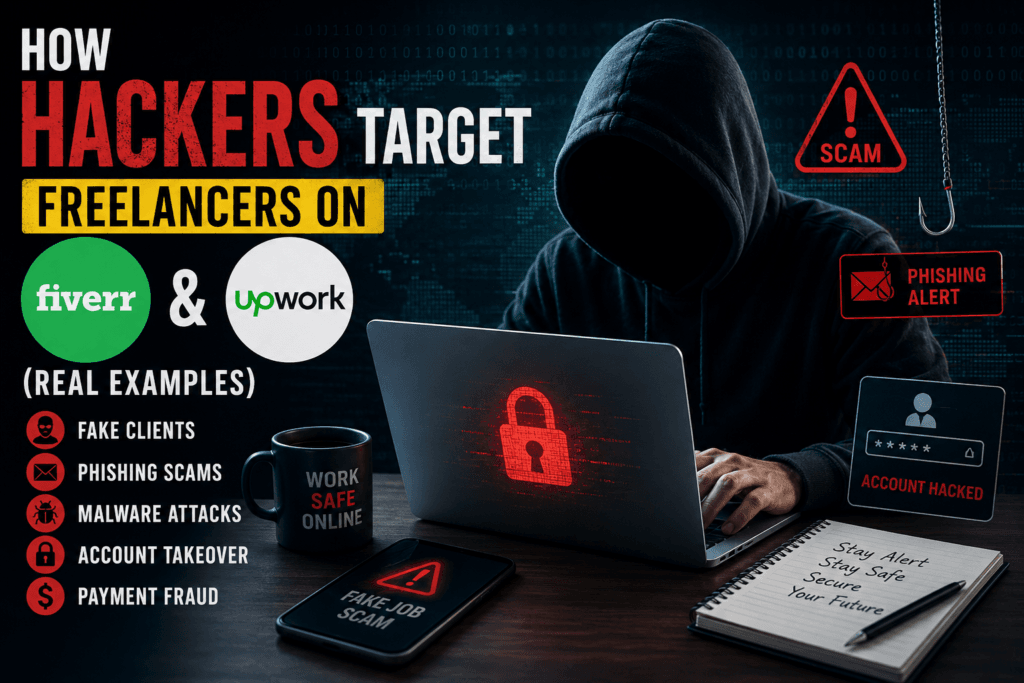
How hackers target freelancers on Fiverr and Upwork has become a growing cybersecurity concern for USA freelancers and small businesses. Freelancing platforms like Fiverr and Upwork have created huge opportunities for remote workers, but they have also become popular targets for phishing scams, fake clients, malware attacks, and account hijacking. Millions of freelancers now work online every day, making cybersecurity more important than ever in 2026.
From phishing scams to fake clients and malware attacks, hackers know freelancers often handle sensitive files, invoices, login credentials, and client data. Small businesses hiring remote workers are also at risk because one compromised freelancer account can expose business information, payment systems, and customer records.
In this guide, you’ll learn how hackers target freelancers on Fiverr and Upwork, see real examples of common attacks, and discover practical ways to stay protected in 2026.
Why Hackers Target Freelancers on Fiverr & Upwork
Freelancers are attractive targets because many work independently without advanced cybersecurity protection. Unlike large companies with dedicated IT teams, freelancers often rely on personal laptops, weak passwords, or public Wi-Fi networks.
Hackers targeting freelancers on Fiverr & Upwork usually focus on:
- Stealing payment information
- Accessing PayPal or bank accounts
- Hijacking freelance accounts
- Sending malware through project files
- Scamming small businesses through fake freelancer profiles
- Stealing confidential client data
Platforms like Fiverr Official Website and Upwork Official Website actively fight fraud, but scammers continue creating new tactics every year.
1. Fake Client Phishing Messages
One of the most common ways hackers target freelancers on Fiverr & Upwork is through phishing messages pretending to be legitimate clients.Many phishing attacks start with fake job offers or suspicious client messages. If you want to learn how to identify scam recruiters and fake freelance opportunities, check out our detailed guide on How to Spot Fake Job Scams on LinkedIn and Freelance Platforms
Real Example
A graphic designer in Texas received a message from a “client” asking them to review project requirements through a Google Drive link. The file looked professional, but clicking it redirected the freelancer to a fake Fiverr login page.
The freelancer entered their login details, and within minutes:
- Their Fiverr account was stolen
- Scam messages were sent to other buyers
- Withdrawal settings were changed
This type of phishing attack is extremely common among USA freelancers.
Warning Signs
- Clients asking you to communicate outside the platform immediately
- Suspicious Google Drive or Dropbox links
- Poor grammar or urgent payment requests
- Fake login pages asking for credentials
How to Stay Safe
- Never log in through links sent in messages
- Use two-factor authentication (2FA)
- Verify URLs carefully before entering passwords
- Keep all communication inside Fiverr or Upwork initially
2. Malware Hidden in Project Files
Another dangerous tactic hackers use against freelancers on Fiverr & Upwork is malware hidden inside project attachments.
Cybercriminals may disguise malicious files as:
- ZIP folders
- Photoshop projects
- PDFs
- Video editing files
- Website templates
Real Example
A freelance video editor in California downloaded a “sample footage package” from a fake client. The ZIP file secretly installed spyware that captured browser passwords and banking credentials.
The attacker later accessed:
- The freelancer’s PayPal account
- Cloud storage accounts
- Client project files
For small businesses, this can become a massive security breach.
Protection Tips
- Scan every file with antivirus software
- Avoid downloading unexpected attachments
- Use secure cloud storage services
- Keep operating systems updated
Reliable tools like Malwarebytes and Bitdefender can help detect dangerous files before they cause damage.
3. Fake Payment Confirmation Scams
Hackers targeting freelancers on Fiverr & Upwork often impersonate payment systems to trick users into delivering work without receiving money.
Real Example
A freelance writer from Florida received an email claiming payment was “pending verification.” The fake email copied Fiverr branding perfectly and asked the freelancer to click a link to “release funds.”
The link stole their login credentials and payment information.
Common Scam Tactics
- Fake “payment released” emails
- Requests for upfront deposits outside the platform
- Fake screenshots of bank transfers
- Requests to continue work before payment confirmation
Best Practices
- Always confirm payments directly inside Fiverr or Upwork dashboards
- Never trust screenshots alone
- Avoid accepting payments outside trusted systems
- Enable email security alerts
4. Account Takeover Attacks
Account hijacking is becoming one of the biggest cybersecurity threats for freelancers in the USA.
Hackers target freelancers on Fiverr & Upwork using:
- Reused passwords
- Credential leaks
- Weak security questions
- Phishing attacks
Real Example
A web developer reused the same password across multiple websites. After a data breach on another platform, hackers tested the password on Upwork and gained full account access.
The attacker:
- Changed profile details
- Redirected payments
- Contacted clients pretending to be the freelancer
This caused financial losses and reputation damage.
How to Prevent Account Takeovers
Use:
- Strong unique passwords
- Password managers
- Two-factor authentication
- Login alerts
Password managers like 1Password and Bitwarden help freelancers create secure passwords without memorizing them.
5. Social Engineering Scams Against Small Businesses
Hackers not only target freelancers — they also attack small businesses hiring through Fiverr & Upwork.
Scammers create fake freelancer profiles with stolen portfolios and fake reviews. Once hired, they may:
- Deliver infected files
- Steal business data
- Request off-platform payments
- Disappear after receiving deposits
Real Example
A small eCommerce business hired a fake SEO expert on Fiverr. The freelancer requested access to the company’s website dashboard and installed malicious scripts that collected customer payment data.
The business later faced:
- Customer complaints
- Reputation loss
- Financial penalties
How Small Businesses Can Stay Protected
- Verify freelancer reviews carefully
- Avoid sharing full admin access immediately
- Use limited permission accounts
- Keep backups of important business data
Cybersecurity Tips for Freelancers on how hackers target freelancers on Fiverr and Upwork
If you want to avoid becoming a victim, follow these cybersecurity practices consistently.Freelancers handling sensitive client files should also follow advanced online safety practices. Our detailed cybersecurity tips for freelancers working online explains how to protect accounts, avoid phishing attacks, secure payments, and stay safe while working remotely.
Use Secure Internet Connections
Avoid public Wi-Fi when accessing freelance accounts or banking information. Use a VPN service for added protection.
Popular VPN services include:
Enable Two-Factor Authentication
2FA adds an extra layer of security even if your password gets stolen.
Keep Devices Updated
Software updates patch security vulnerabilities hackers often exploit.
Watch for Urgent Messages
Scammers create urgency to pressure freelancers into making mistakes quickly.
Separate Work and Personal Accounts
Using separate emails and payment systems reduces risk if one account gets compromised.
How Freelancers Can Build Long-Term Online Security
Freelancers and small businesses should treat cybersecurity as an ongoing process, not a one-time setup.
How hackers targeting freelancers on Fiverr and Upwork constantly evolve their techniques. Staying informed about new scams is critical for protecting income and client trust.
Long-term security habits include:
- Regular password updates
- Monitoring account activity
- Backing up important files
- Using secure cloud storage
- Educating yourself about phishing attacks
Cybersecurity awareness can save freelancers thousands of dollars and protect business reputations.
Conclusion
Understanding how hackers target freelancers on Fiverr and Upwork is essential for every USA freelancer and small business owner in 2026. Cybercriminals use phishing links, fake clients, malware, payment scams, and account hijacking to steal money and sensitive information from remote workers.
The good news is that most attacks can be prevented with strong cybersecurity habits. Using secure passwords, enabling two-factor authentication, verifying clients carefully, and avoiding suspicious links can dramatically reduce risk.
As remote work continues growing, hackers targeting freelancers on Fiverr & Upwork will continue searching for easy victims. Freelancers and small businesses that prioritize online security will be far better protected against future cyber threats.
FAQs
1.How hackers target freelancers on Fiverr and Upwork through phishing scams?
Hackers target freelancers on Fiverr and Upwork through phishing scams by sending fake client messages, login pages, and suspicious links designed to steal passwords, payment details, and freelance account access.
2.How hackers target freelancers on Fiverr and Upwork using fake payment emails?
Hackers target freelancers on Fiverr and Upwork using fake payment emails that imitate official platform notifications and trick freelancers into clicking malicious links or sharing sensitive financial information
3.How hackers target freelancers on Fiverr and Upwork with malware attachments?
Hackers target freelancers on Fiverr and Upwork with malware attachments hidden inside ZIP files, PDFs, design files, or project documents that install spyware or ransomware on freelancer devices.
4.How hackers target freelancers on Fiverr and Upwork through account takeover attacks?
Hackers target freelancers on Fiverr and Upwork through account takeover attacks by using stolen passwords, phishing techniques, credential leaks, and weak login security to gain unauthorized access to freelancer accounts.
5.Can small businesses get hacked through freelancers?
Yes. If businesses share sensitive access with fake or compromised freelancers, hackers can steal business data or infect company systems.
6.What is the best protection against phishing scams?
The best protection regarding how hackers target freelancers on Fiverr and Upwork includes:
•Verifying links carefully
•Using 2FA
•Avoiding off-platform communication
•Never sharing passwords
Using updated antivirus software